· SoilSense team
Overwatered or Underwatered? How to Tell When the Leaves Look the Same
A plant that is drowning and a plant that is parched send the same message upstairs. Both go limp. Both yellow. Both shed leaves from the bottom first. In both cases the leaf is short of water, and a leaf cannot report whether the shortage is because there is none in the pot or because the roots can no longer take any up. Staring harder at the foliage will not separate them. The separation happens below the surface, and it takes about a minute.
Why one symptom can mean overwatered or underwatered
Roots need two things from soil at once, and they are in competition. Water, drawn from the thin film clinging to every soil particle. And air, held in the pores between those particles, because roots respire in the dark just as leaves do in the light.
Dry soil removes the first. The film thins until what is left clings more tightly than a root can pull, and uptake stops with water still technically present in the pot. Waterlogged soil removes the second. Every pore fills, air is displaced, and root hairs starve of oxygen. If the condition holds they die back, at which point the plant is standing in water it has lost the ability to drink.
Meanwhile the leaf carries on losing water to the air. Supply fails, demand does not, and the plant softens. That droop is a report about supply. It says nothing about the pot — and the pot is where the cause lives.
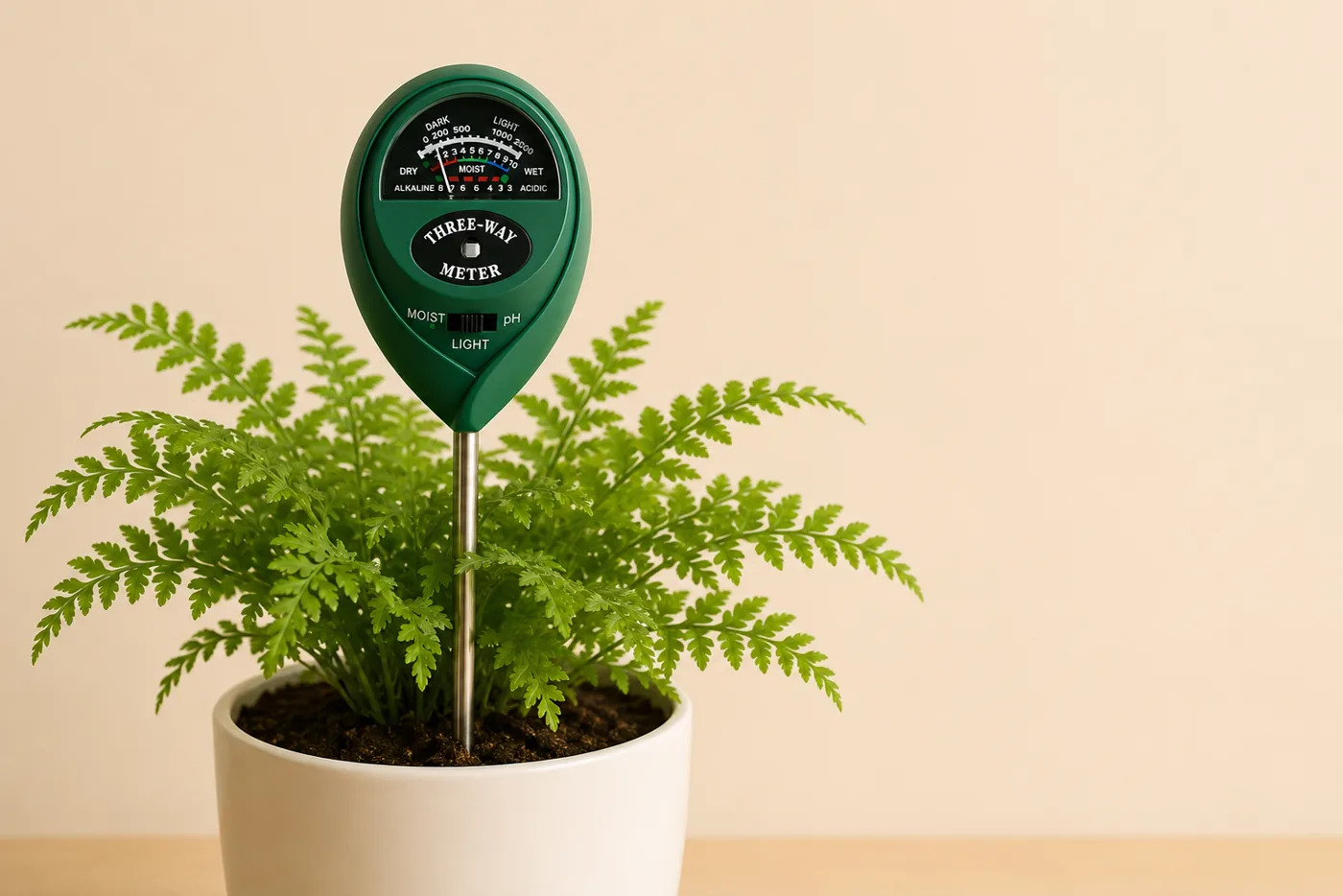
Which is why a misdiagnosed plant gets worse rather than standing still. Drooping reads as thirst, so the watering can comes out, and when the cause was already too much water that reflex deepens the condition doing the damage. More houseplants are lost to overwatering than to anything else, and this loop is how it usually happens.
Overwatered or underwatered: the signs that point both ways
Four symptoms account for most of what sends people looking for an answer, and each appears at both ends of the scale.
Limp, drooping leaves. Too dry tends to feel papery and light, edges curling inward. Too wet tends to feel soft and heavy, often still dark green. Tendencies are not tests: a pot left soggy long enough for roots to die back droops in the dry-looking way, because from the leaf's point of view it now genuinely is dry.
Yellowing. Thirst usually takes the oldest, lowest leaves first and finishes them crisp and brown. Soggy soil usually yellows several at once and leaves them soft and full. Usually is doing a lot of work in that sentence.
Brown tips and edges. Dry soil browns them brittle enough to snap; waterlogged soil browns them dark and soft. Low humidity, salt from feeding and a leaf resting against a cold window all do it too, so on their own they point to no diagnosis at all.
Leaf drop, and growth that has stopped. A plant sheds leaves it can no longer supply and stops making new ones, and both conditions end in a supply failure. The oldest leaves go first either way.
Notice what they have in common. Each is the plant reporting that supply has failed. Not one is a report about how much water is in the pot, which is the actual question. That is the gap the eye cannot close and a reading can.
The one place that says whether a plant is overwatered or underwatered
One piece of evidence separates the two cases: the moisture in the soil around the roots. Not the surface, which dries first and fastest and misleads in both directions. Not the weight of the pot, which changes with the pot as much as with the water. The root zone, where uptake either happens or does not.
Push a clean probe into the soil near the root ball, give the needle its full minute to settle, and read it. How far in to push is answered in the probe questions on our main page, and keeping the metal bare, so today's reading means what last month's meant, is covered in our guide to cleaning the probe.
The diagnosis is then immediate. A drooping plant with the needle sitting high is not thirsty: the water is in the pot and the roots have stopped using it, and the last thing that pot needs is more. A drooping plant with the needle at the bottom is exactly what it looks like. Two identical-looking plants, two opposite instructions, one minute of measurement between them.
One reading names the case; three prove it. Take one now, one in two days and one in four, in the same spot at the same depth, and write them down. A needle that falls steadily is a pot behaving normally. A needle pinned high for days while the leaves worsen is drainage, not habit. Neither conclusion exists in a single number.
Read the number against the plant, not the middle of the dial
A reading of 5 is not a verdict on its own. It is comfortably moist for a fern, mid-band for a tropical, and a slow emergency for a cactus that should sit near the bottom of the scale between waterings. The number becomes a diagnosis only next to the band that plant belongs in — the table by plant type is in our guide to when to water, and if your meter speaks in percentages rather than a 1–10 dial, the two languages are lined up in the soil moisture chart.
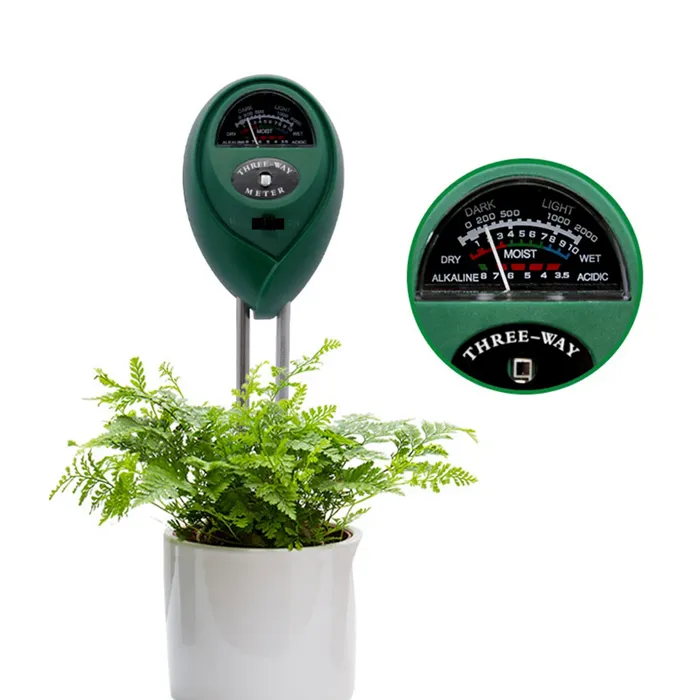
So what you are reading is not the number but the gap between it and the band, and that gap has a direction. Above the band and drooping means overwatered. Below the band and drooping means underwatered. The same needle position can be either one depending on what is planted in the pot, which is precisely why the leaf never resolved the question.
When the dial reads high and the plant is drooping
Stop watering, and mean it. Nothing else on this list works while water is still going in. The plant will keep looking thirsty; the dial is what gets you through that, because the needle comes down long before the leaves acknowledge anything.
Find out where the water is going. Lift the pot out of its cover and look underneath. Standing water in a saucer, an outer pot with no way out, a drainage hole plugged by a root or a stone, or a hole that never existed — one of those is behind most pots that will not dry.
Help the pot dry. Somewhere brighter with air moving past it pulls moisture out faster than a still corner, and the plant can use the light while it recovers. Scorching afternoon sun is the one place not to put it.
Hold off on feeding. Roots short of oxygen cannot take up nutrients, so feed stays in soil that is not moving, and the salt left behind browns leaf edges like a whole new problem. Feed once the readings are back in the band.
Repot only for a reason. If the readings and the drainage check point at a mix broken down into something dense and airless, repot into a coarser mix and a pot that drains. If the saucer was the problem, leave the roots be.
Then measure your way out: read every day or two and wait for the needle to reach the plant's band before watering again. That is where the tool earns its place — it turns waiting into something you can watch happen.
When the dial reads low and the plant is drooping
Water thoroughly, not lightly. Enough goes in that it appears at the drainage hole, which is how you know the whole root ball has been wetted rather than the top inch. Frequent small waterings leave a damp surface over a dry core, and the meter exposes the difference: the surface changes, the root-zone reading does not.
Watch for a root ball that repels water. Mix allowed to dry hard shrinks away from the sides of the pot and stops absorbing. Water runs down the gap and out of the bottom in seconds, so the pot feels convincingly watered while nothing has reached the roots. The signature is water out of the bottom almost immediately, and a dial that has not moved.
Rehydrate that case slowly. Either add water in small amounts over an hour, letting each one soak in, or stand the pot in a few inches of water until the surface darkens — then lift it out and drain it, because a pot left standing turns today's dry problem into next week's wet one.
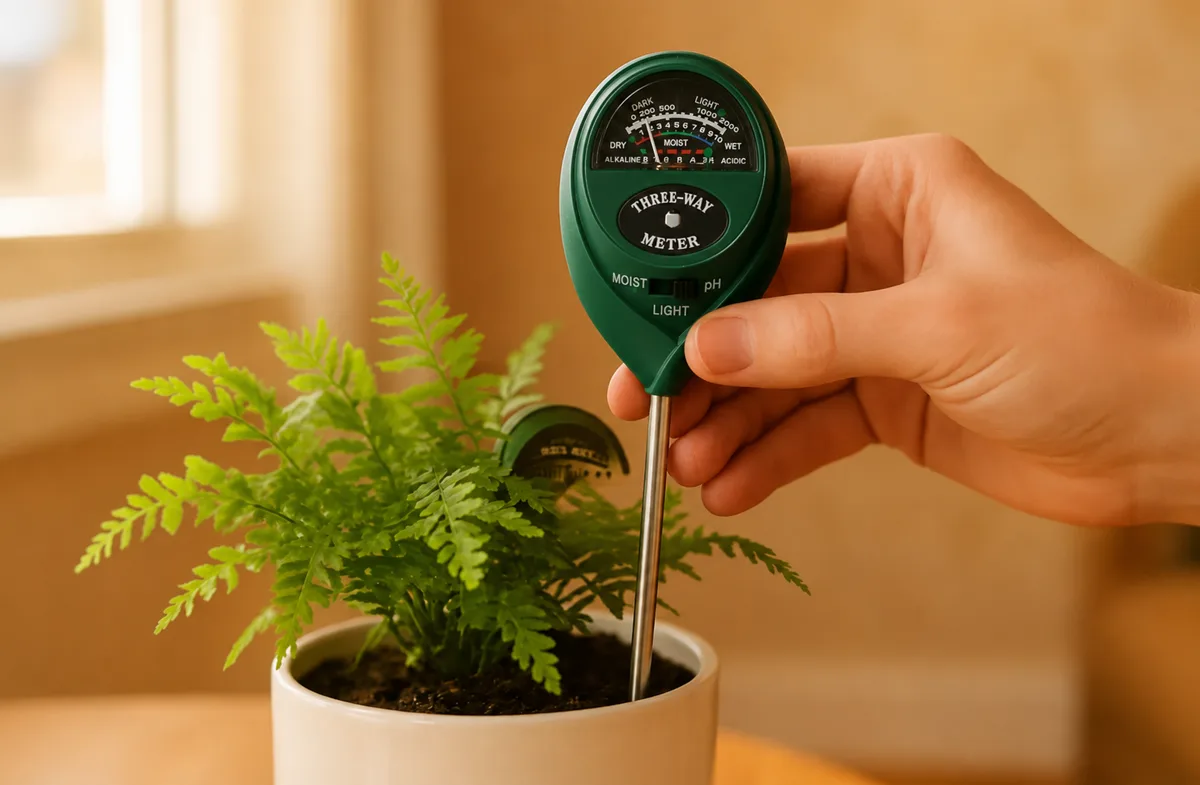
Confirm with the probe. Re-read once the water has had an hour to spread. The confirmation you want is the needle sitting inside the plant's band, at the depth where the roots are.
A plant back at the bottom of the scale a day after every soak has outgrown its pot rather than your watering. And which hour of the day to water outdoors is a separate question, worked through in the best time of day to water plants.
When the reading is right and the leaf still looks wrong
Sometimes the needle sits exactly where it should, three readings apart, and the plant still looks unhappy. That is a useful result rather than a dead end. Water is the largest single cause of houseplant trouble and the one people are most likely to act on incorrectly, so taking it off the list with a measurement means everything you do next is aimed at something real.
What is left is a short list. Light, which pales a plant that has too little and scorches one that has too much. Acidity, which locks nutrients away from otherwise healthy roots — the same probe reads it on the pH side of the dial, and what to do with the result is in our guide to testing soil pH at home. Salt built up from feeding. Cold draughts and hot radiators, which pull water out of leaves faster than roots replace it. And pests, which show on the undersides of the leaves and are ruled out with a look.
Allow for a lag. A plant that spent a fortnight in soggy soil lost root tissue and has to grow it back before it can supply the leaves it carries. Readings can be correct for a week while the foliage stays sorry-looking, and leaves already marked usually stay marked — new growth is where recovery shows.
The whole diagnostic comes down to one habit: measure before you water, not after the leaves start asking. What a probe reading settles is set out in what these meters can and cannot tell you. A plant checked before every watering never reaches the point where two opposite problems must be told apart from a leaf.
Frequently asked questions
My plant drooped, I watered it, and now it looks worse. What happened?
That is the usual sequence when the pot was already too wet. Drooping reads as thirst, so the reflex is to water, and the water goes into soil that had no air left in it. Take a reading first: if the dial sits high, the fix is drying and draining, and every extra watering pushes the recovery further away.
Can a pot be too dry and too wet at the same time?
In effect, yes, and it is a common way to mislead yourself. A root ball that has dried hard shrinks away from the sides of the pot, so water poured on top runs down the gap and straight out of the drainage hole. The rim is wet, the pot has drained, and the core took up nothing. Probing near the root ball rather than at the edge is what catches it.
How long should it take for the leaves to look right again?
Slower than the dial, in both directions. The needle answers within a minute of a correction; the foliage takes days, and leaves already marked often stay marked, so watch the new growth instead. A parched plant given a proper soak usually firms up within hours, while a pot that has been sitting soaked takes longer, because roots have to regrow first.
Free shipping, delivered in 6 to 10 business days · 30-day money-back guarantee